When I started working with the Internet, I had only one option – the Mosaic Browser. Then came Netscape which seemed like a leap to me at the time. Looking back it really has been a long time and the changes to not only how pages are built, but the whole advent of CSS, HTML5 and even Flash (could it actually be 10 years since video was introduced as a component to Flash?).
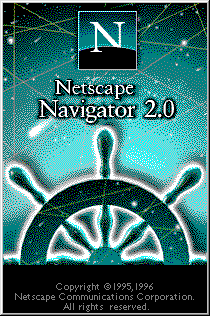
Looking at the old start up icon screen, one can tell that the resolution of monitors has also changed. The pixelation in the images here is because of the 256 depth colour display, so why have large (over 25K was BIG) files and resolution when no one can see it?

Before I got my first version of Dreamweaver 2.0, I also used the Communicator suite to edit and create web pages in the neat and free WYSIWG editor.
Some wikipedia sourced 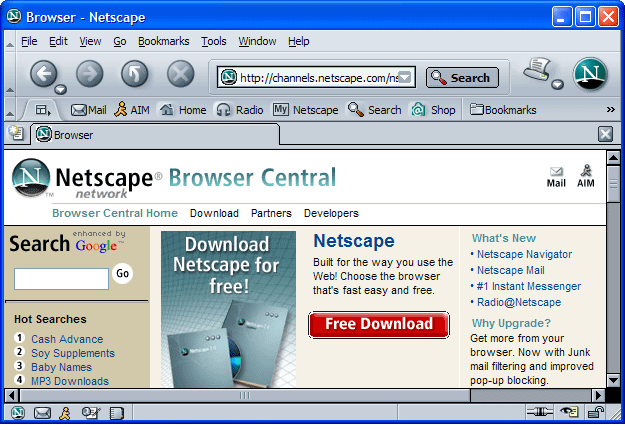 cool facts:
Historically, Mozilla had been used internally as a codename for the Netscape Navigator web browser from its beginning. Jamie Zawinski came up with the name during a meeting while working at the company. The name was created as a portmanteau of the words “Mosaic killer”, hinting that Netscape would be the end to the (then only) competitor browser, Mosaic. The logo was a reference to the name of the fictional monster Godzilla.
The business demise of Netscape was a central premise of Microsoft’s antitrust trial, wherein the Court ruled that Microsoft Corporation’s bundling of Internet Explorer with the Windows operating system was a monopolistic and illegal business practice. The decision came too late for Netscape however, as Internet Explorer had by then become the dominant web browser in Windows.
An important innovation that Netscape introduced in 1994 was the on-the-fly display of web pages, where text and graphics appeared on the screen as the web page downloaded. Earlier web browsers would not display a page until all graphics on it had been loaded over the network connection; this often made a user stare at a blank page for as long as several minutes. With Netscape, people using dial-up connections could begin reading the text of a web page within seconds of entering a web address, even before the rest of the text and graphics had finished downloading. This made the web much more tolerable to the average user.
In March 1998, Netscape released most of the development code base for Netscape Communicator under an open source license. The product, Netscape 5, used open-source community contributions, and was known as Mozilla, Netscape Navigator’s original code name. Netscape programmers gave Mozilla a different GUI, releasing it as Netscape 6 and Netscape 7. After a long public beta test, Mozilla 1.0 was released on June 5, 2002. The same code-base, notably the Gecko layout engine, became the basis of independent applications, including Firefox and Thunderbird.
Recent Comments